
From one French sound to a sentence you can use.
Parle is organized around a simple learning problem: recognising a French word is not the same as being able to say it. Each guided mission follows Hear, Shape, Say, Use: understand an exchange, focus on a sound, record a useful phrase, then answer a practical situation.
Four steps, one useful exchange.
Each step gives you one clear action: understand the model, shape a sound, record your line, then use it in an everyday situation.
Hear
Listen to a reviewed French exchange. Use meaning support to understand what each speaker is saying.
Shape
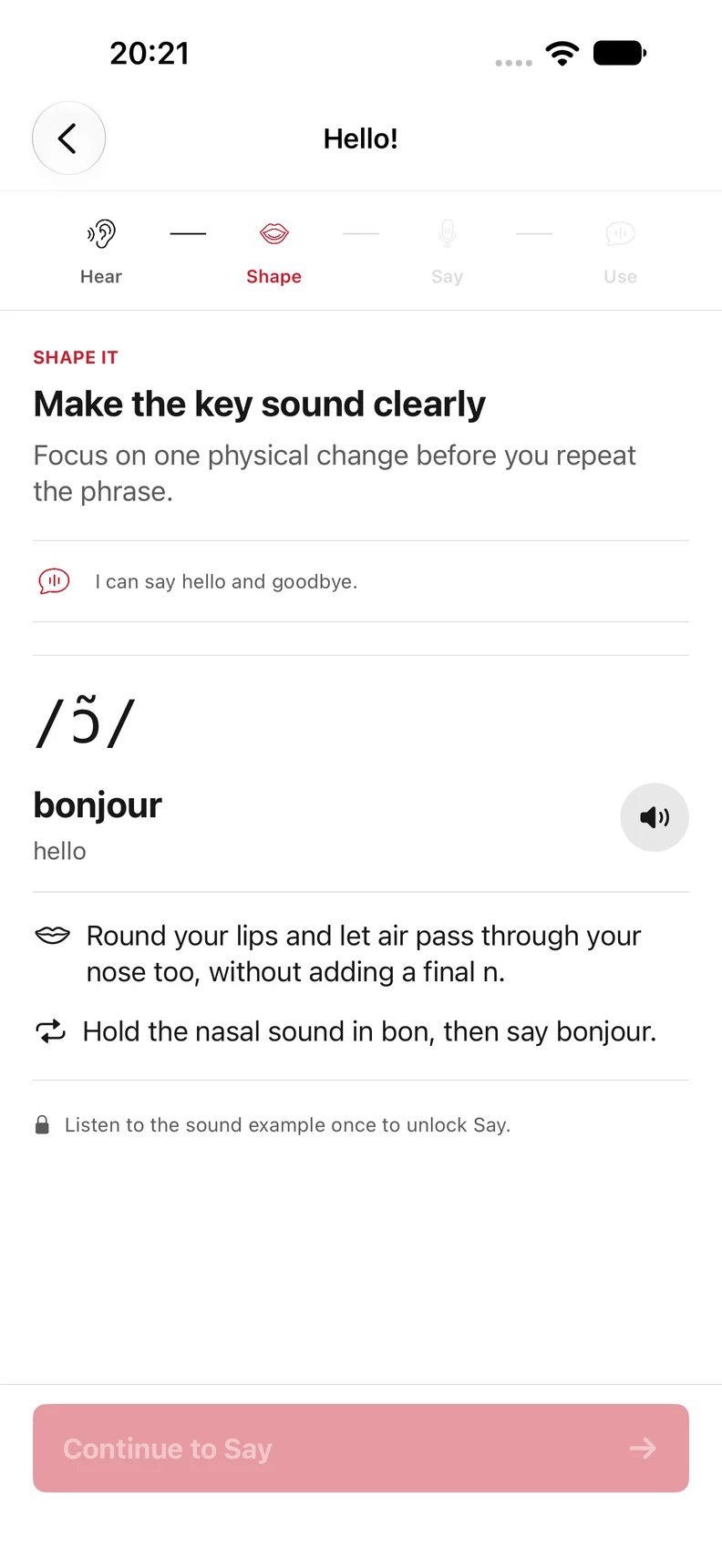
Focus on one French sound. Connect its IPA symbol and spelling to a concrete mouth or airflow cue, then hear and repeat the model.
Say
Record a useful phrase and replay your voice beside the model. Phrase Match highlights the words detected in your recording so you can choose what to repeat.
Use
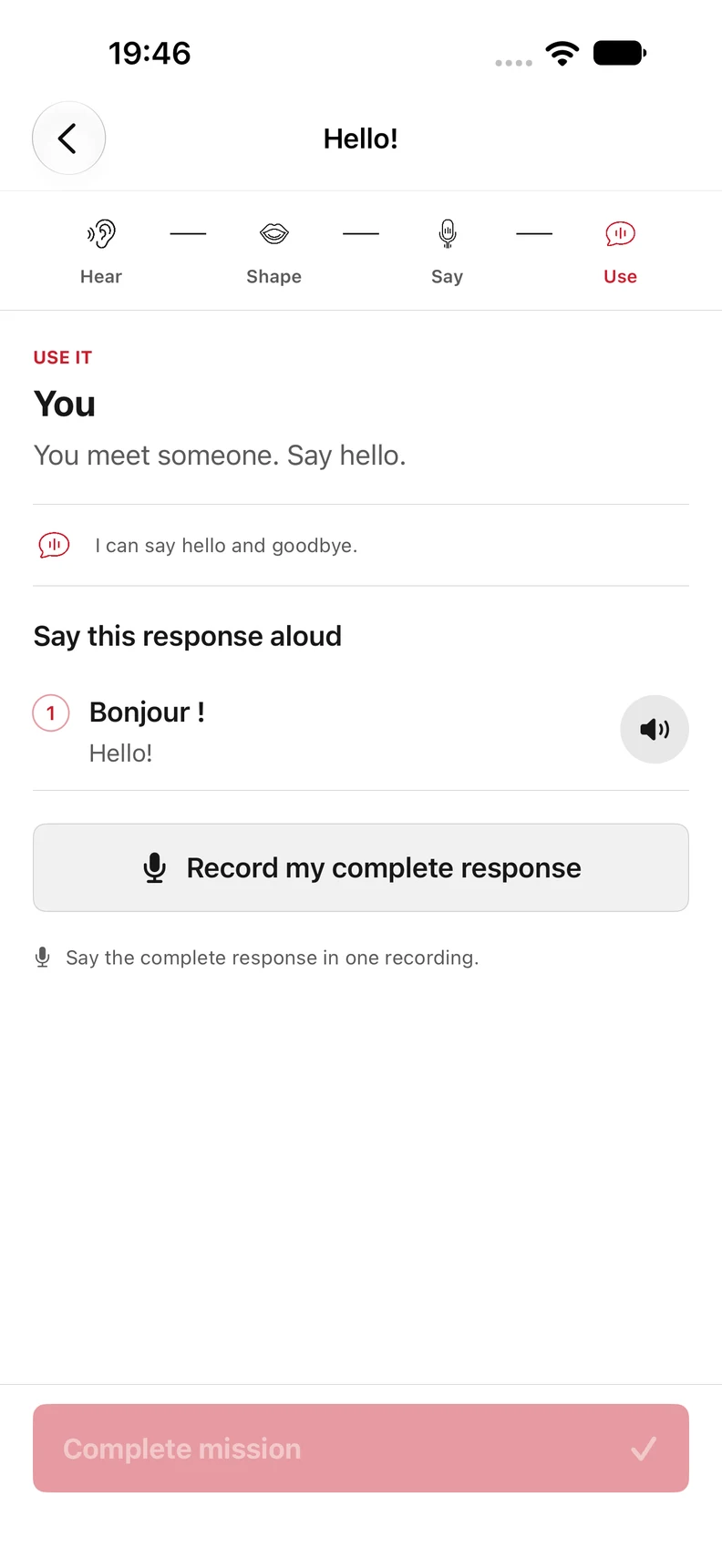
Answer a short everyday situation in your own voice. Carry the phrase into a practical exchange.
The first lessons begin with survival speech.
Beginners start with greetings, introductions, basic needs, and high-frequency sound patterns. Pronunciation remains the training lens, but every lesson also has a practical communication goal.
- Hello!I can say hello and goodbye.A0
- My name is...I can say my first name.A0
- I don't understandI can say I don't understand and ask someone to repeat.A0
- Introduce yourselfI can introduce myself and say goodbye.A0
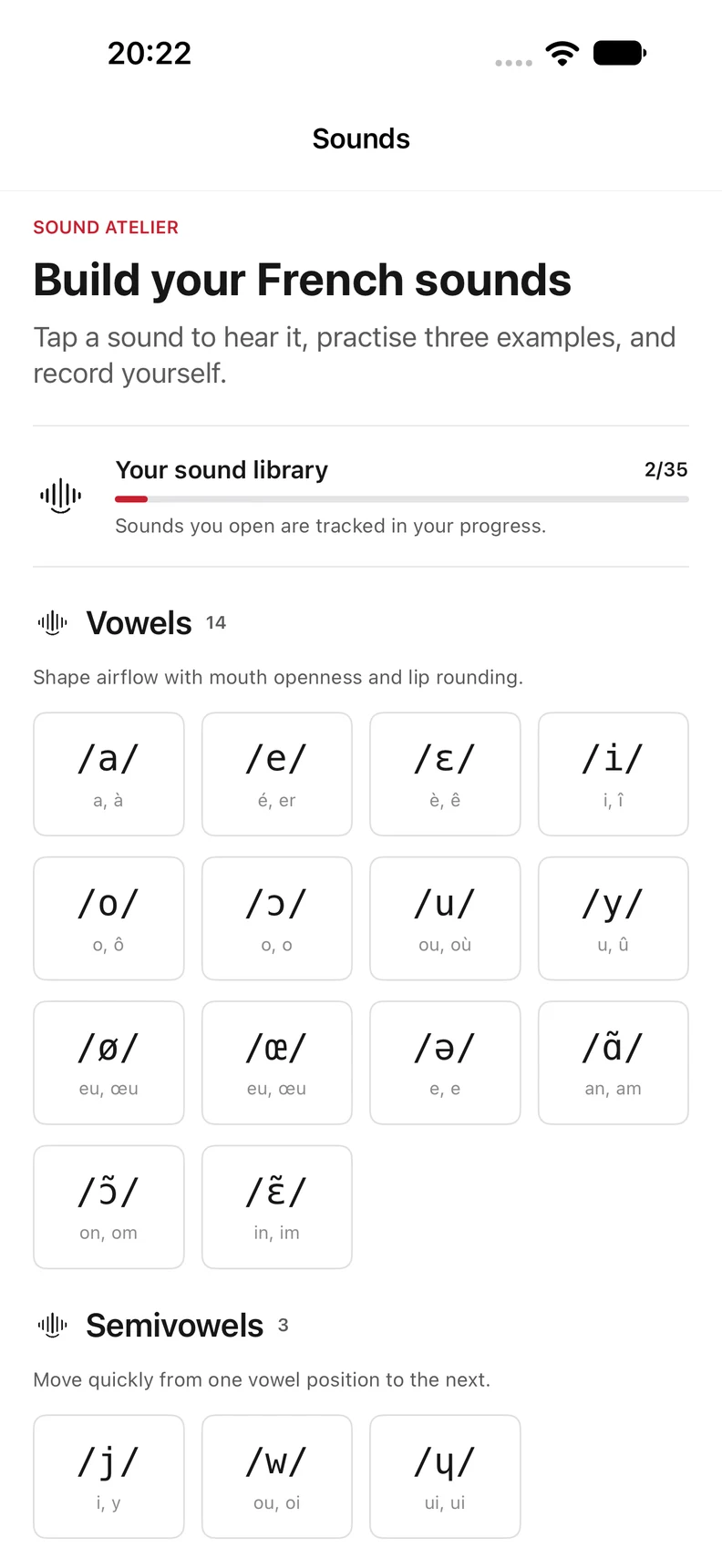
Practise the method in the app.
Start with one sound, then carry it into a sentence and a daily scene.